

Most people think SEO starts with keywords.
It doesn’t.
Before Google can rank your content, it has to find it. Then it has to understand it. Only after that can it decide whether your page deserves a place in the search results.
That’s why Google crawling matters.
Google recently shared more details about how its crawling system works. One update stood out. Google only processes the first 2 MB of HTML on a web page. If your HTML goes beyond that, the extra content may not be processed during crawling.
For most websites, this isn’t something to panic about.
The bigger question is this.
Is Google spending its time crawling the pages that actually matter?
That’s where many websites fall short.
Crawling Is Only the First Step
A page being crawled doesn’t mean it will appear on Google.
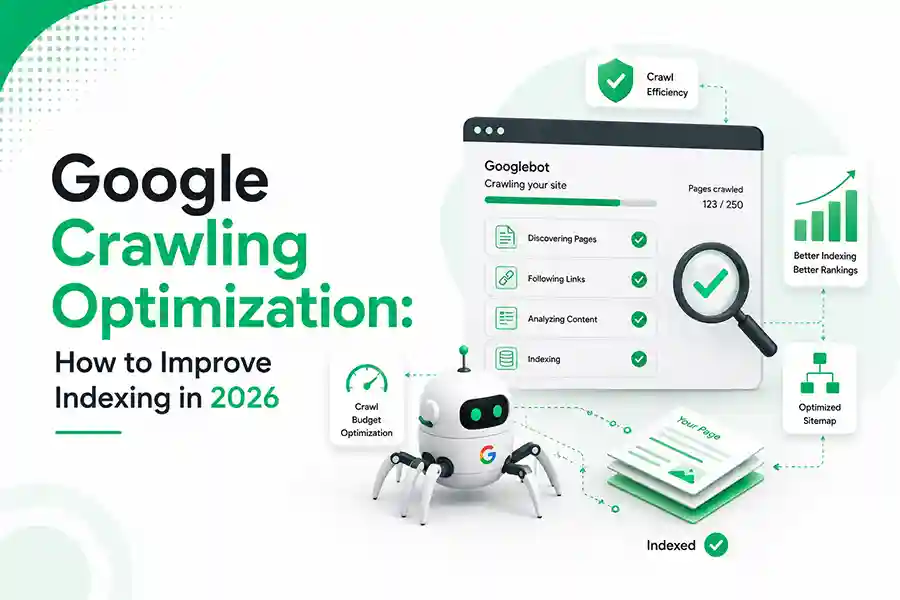
Every page goes through three stages.
- Google discovers the page.
- Google crawls and renders it.
- Google decides whether to index it.
Many websites make it through the first two stages but never reach the third.
Why?
Because Google doesn’t see enough value in the page.
Thin content, duplicate pages, outdated blog posts and low-quality AI content can all reduce your chances of getting indexed.
Instead of creating more pages, focus on creating better ones.
Help Google Find Your Best Content
Think of your website like a road network.
Some roads are busy.
Others are almost empty.
Google works in a similar way.
Pages with strong internal links are easier to discover. They also get crawled more often.
If an important service page only has one link pointing to it, Google may not treat it as a priority.
Link to your important pages naturally from:
- Your homepage
- Related blog posts
- Service pages
- Category pages
A strong internal linking structure helps both users and search engines.
Don’t Ignore Website Performance
Your website’s speed affects more than user experience.
It also affects crawling.
If your server is slow or keeps returning errors, Google may reduce how often it visits your website.
Common issues include:
- Slow server response
- Frequent 500 errors
- Broken pages
- Redirect chains
A healthy website is easier for Google to crawl.
Watch Your Crawl Activity
Most website owners never check how Google crawls their site.
That’s a mistake.
Open the Crawl Stats report in Google Search Console.
You’ll see:
- How often Google visits your website
- Which pages are being crawled
- Server response times
- Crawl errors
- Response codes
These reports often reveal problems before your rankings start to drop.
Keep Your XML Sitemap Clean
An XML sitemap is not a ranking factor.
But it helps Google discover important pages faster.
Treat it like a roadmap.
Remove pages that no longer exist.
Don’t include duplicate URLs.
Make sure your sitemap only contains pages you actually want Google to index.
A clean sitemap sends clearer signals to Google.
Large Websites Need Extra Attention
If your website has a few hundred pages, crawl budget probably isn’t your biggest concern.
But if you manage thousands of products, blog posts or location pages, every crawl matters.
Large websites often waste Google’s time crawling:
- Filter URLs
- Search result pages
- Duplicate content
- Old archived pages
- Empty category pages
Cleaning these up helps Google spend more time on pages that generate traffic.
The Bottom Line
Google isn’t trying to crawl every page equally.
It’s trying to crawl the pages that offer the most value.
That’s why modern SEO isn’t just about crawl budget.
It’s about crawl efficiency.
Keep your website organised.
Build strong internal links.
Publish useful content.
Fix technical issues quickly.
When you make it easy for Google to crawl and understand your website, you also make it easier for your best pages to rank.
And that’s exactly what good SEO is all about.

Comments are closed.